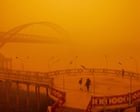
Indonesia is testing dry ice dispersal by aircraft to combat widespread wildfires and the toxic haze they produce across South Sumatra. The coordinating security minister announced the pilot project would begin on Thursday, according to The Guardian.
The country has already attempted multiple firefighting methods including cloud seeding, water bombing and deployment of army personnel. The shift to dry ice represents an escalation of those efforts as fires continue to burn across the archipelago.
The haze from Indonesia's fires has triggered regional tension. Neighboring countries have expressed concern about the toxic smoke spreading across borders, making the fire crisis a cross-boundary environmental and diplomatic issue.
Indonesia faces recurring fire seasons, particularly in peatland regions where fires burn deeper and produce sustained smoke. Peatland fires are difficult to extinguish because moisture beneath the surface keeps embers alive underground. Cloud seeding, which seeds clouds to encourage rain, and water bombing from aircraft are standard responses but have proven insufficient at the scale of the current fires.
Dry ice, solid carbon dioxide, works by creating localized cooling in the atmosphere. When dropped into clouds, it can theoretically trigger precipitation by lowering air temperature below the dew point, causing water vapor to condense. The method remains experimental in large-scale firefighting applications.
The pilot in South Sumatra will test whether dry ice can be deployed operationally across affected areas. Success would require sustained supply chains and coordination between aviation and fire management authorities. No results from the test run have yet been reported.
The fires pose health risks to Indonesia's population and neighboring countries through poor air quality. Schools and offices have closed in previous seasons when air quality indices reached hazardous levels. The regional nature of the haze has prompted complaints from Singapore, Malaysia and other Southeast Asian nations in past fire seasons.