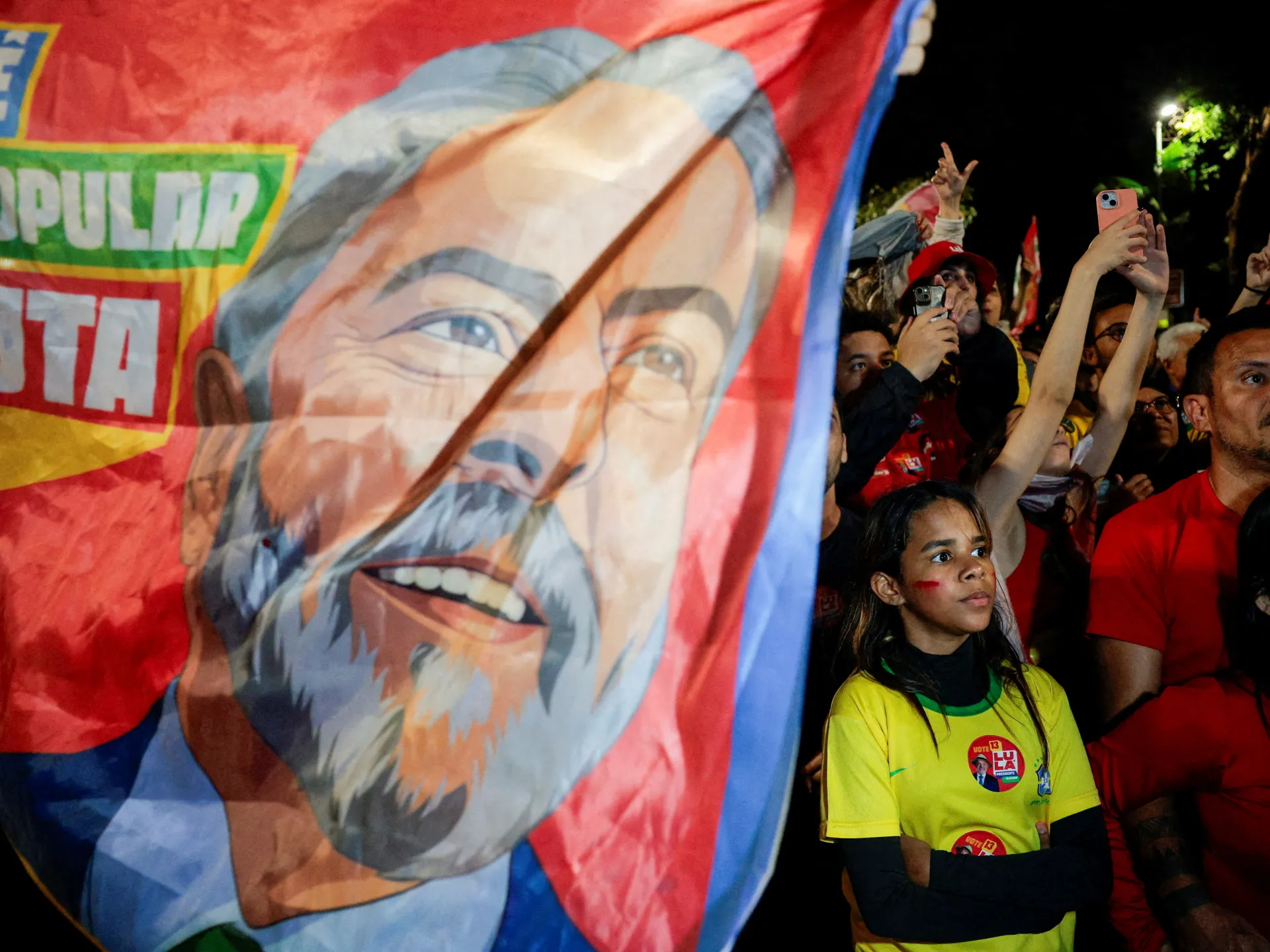
Brazil's President Luiz Inacio Lula da Silva won an unprecedented fourth term on Sunday, delivering relief to the BRICS alliance at a moment when the grouping faces pressure from the incoming Trump administration.
Lula's opponent, Flavio Bolsonaro, had signaled plans to reconsider Brazil's role in BRICS and pursue closer alignment with Washington. Bolsonaro reportedly promised the US Trade Representative that Brazil's Pix instant payment system would remain outside non-Western payment schemes, protecting dollar dominance. His victory would have weakened the bloc's political cohesion and slowed cooperation on trade and financial reform, according to analysts quoted by Al Jazeera.
Imran Khalid, a geostrategic analyst at Foreign Policy in Focus, told the outlet that the real risk was not Brazil leaving BRICS but operating as an unwilling member. "BRICS makes decisions by consensus, so one unwilling founding member can slow everything down from the inside," Khalid said.
Lula was one of BRICS' architects nearly two decades ago and has long advocated for a multipolar international system where emerging economies hold greater influence over global rules and institutions. Esmat Zaidan, professor of public policy at Qatar's Hamad Bin Khalifa University, said Lula's victory was "important to BRICS' political continuation in the current climate as it seeks to increase the bloc's role and make it stronger in global governance."
However, experts cautioned that continuity does not mean unity. BRICS member countries maintain distinctly different economic interests and geopolitical goals. Guy Burton, a geopolitical and policy analyst, noted that the bloc includes Iran and the UAE, which sit on opposite sides of the current Middle East conflict, illustrating "how limited its cohesion is." Many members also maintain strong economic and security relationships with the US.
Zaidan said Lula's victory strengthens the case for strategic autonomy among emerging economies rather than confrontation with Washington. BRICS' diversity means it is "potentially more effective when it expands the choices available to its members, rather than defining itself simply through opposition to the United States."
Among BRICS' goals is promoting trade in local currencies rather than dollars. Lula's victory provides political foundation for these efforts, given Brazil's status as one of the bloc's largest trading economies.