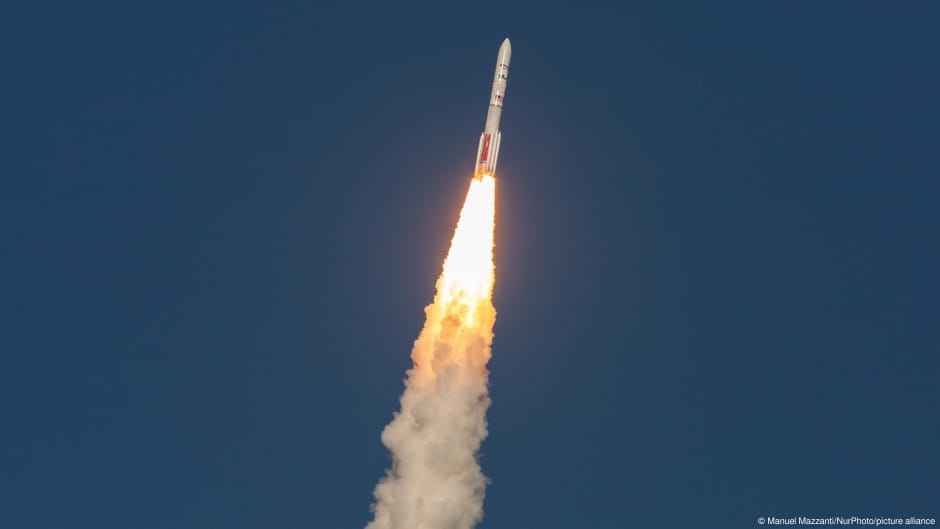
A Vulcan rocket operated by United Launch Alliance, a joint venture of Boeing and Lockheed Martin, failed about 10 minutes after liftoff from Cape Canaveral Space Force Station on Sunday. The rocket lost all 40 Amazon Leo internet satellites it was carrying, marking the first total mission failure in ULA's history since its 2006 formation.
ULA confirmed the anomaly in a statement but said the exact cause remained unclear. "Every flight generates data, and every flight teaches us something," the company said. "Since the anomaly just occurred, we don't have any specific data yet to understand what occurred today."
The failure ended ULA's streak of successful missions and is expected to trigger a lengthy technical investigation that could ground the Vulcan rocket for months. Sunday's launch was Vulcan's fifth since its 2024 debut and its first in nine months, following separate investigations into its solid rocket boosters and BE-4 engines, which Blue Origin supplies.
Blue Origin had previously identified a main oxygen valve problem in the BE-4 engines. After anomalies on two earlier Vulcan flights in 2026, the company retrofitted the engines, though it remains unclear whether the BE-4 engines played any role in Sunday's failure. The U.S. Space Force had paused Vulcan's national security launches pending investigation results and corrective measures.
Amazon said in a statement that "there is risk with any launch, and that's especially true for inaugural missions like LV-01," but called ULA "a trusted partner." Before Sunday's mission, Amazon had launched 398 Leo satellites across 14 missions since 2025, representing roughly 12 percent of the 3,236 satellites needed for global coverage. The company had hoped to begin initial internet services this year.
The failure compounds challenges for Amazon's satellite internet program, which competes with SpaceX's Starlink network. SpaceX operates its own rockets to deploy satellites, while Amazon and other companies rely on external launch providers, adding cost and complexity.