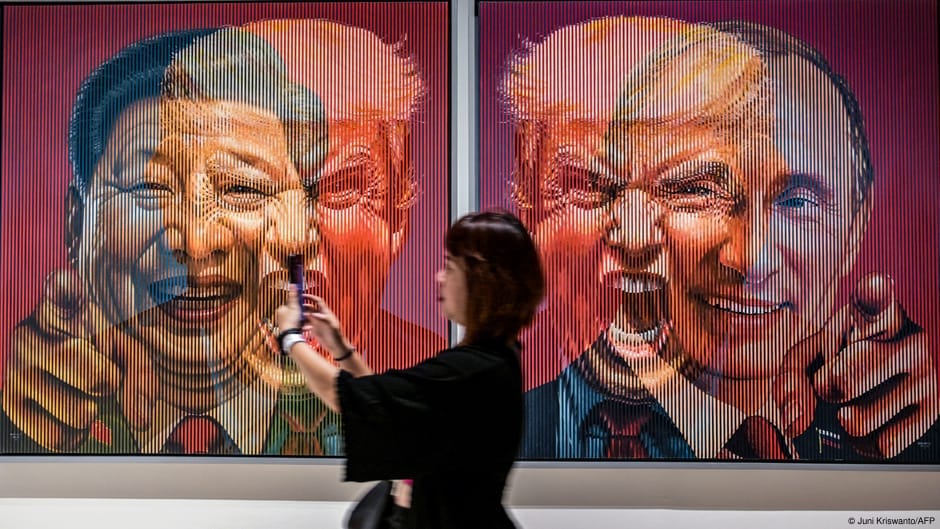
Trump, Xi and Putin will hold their first trilateral meeting at the Asia-Pacific Economic Cooperation summit in Shenzhen this week, with Trump also scheduled for separate talks with Xi Jinping on November 18-19.
Experts interviewed by DW do not expect major breakthroughs. Patricia M. Kim, a senior fellow at the Brookings Institution, said both leaders have incentive to maintain an existing trade truce and prevent bilateral relations from deteriorating. Kim expects "neither uncontrolled escalation in tensions between the US and China nor a dramatic improvement in ties, but rather the continuation of the transactional détente we see today" over the next two years.
Jia Hui Tee, a senior trade policy analyst at the Hinrich Foundation, expects Trump and Xi to focus on stabilizing their trade relationship. She said the two leaders could make progress on reciprocal tariff cuts covering goods worth $30 billion on each side, with an implementation timeline serving as "an easy win" for both governments. Washington wants Beijing to accelerate purchases of US agricultural products and increase exports of rare earths and critical minerals.
Tee noted that China would likely be cautious about delivering on commitments, particularly after the midterm elections weakened Trump domestically. She said neither side would want to surrender bargaining chips easily, including rare earth exports and technology export controls. Another Trump-Xi meeting is expected in December at the G20 summit in Miami, allowing contentious issues to be deferred.
Russia hopes the trilateral talks will enhance its diplomatic standing and help secure a Ukraine settlement on Moscow-favorable terms. Yun Sun, director of the China Program at the Stimson Center, said Moscow wants to create the impression that Washington is willing to negotiate with Russia, which could undermine European and Ukrainian confidence.
Alicja Bachulska, a policy fellow at the European Council on Foreign Relations, said each leader holds distinct priorities. She stated: "Russia wants recognition, the US wants arms control, and China wants status without strings attached." Bachulska expects "each leader to restate their own positions rather than produce real solutions."
Michael Kimmage, director of the Kennan Institute, said China may be more concerned with the political survival of Russian President Vladimir Putin than with ending the Ukraine war. China views Russia as an important energy source and diplomatic partner. Kimmage does not expect China to pressure Putin into ending the war if Putin opposes it.