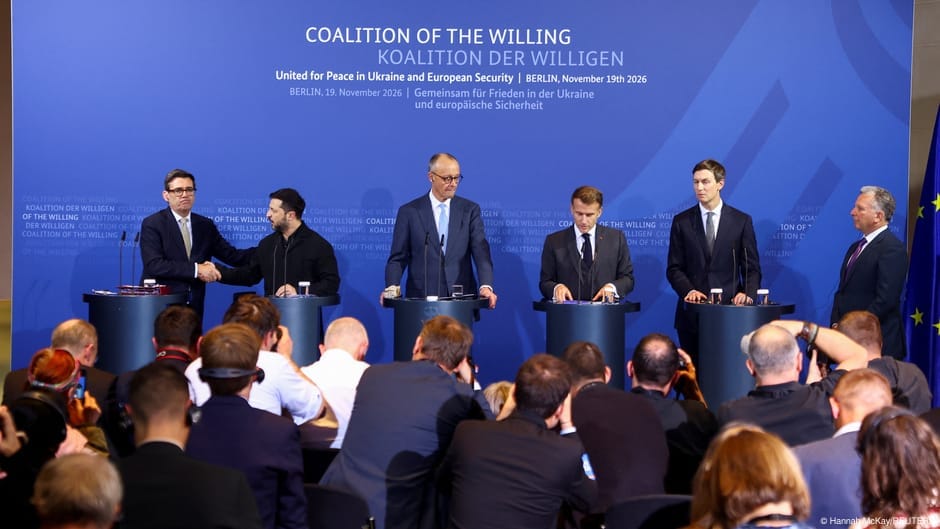
Leaders of Germany, France, the UK and Ukraine met in Berlin on November 19 and reaffirmed support for Kyiv in a joint statement, condemning Russia's "systematic escalation" of missile and drone attacks on Ukrainian civilians and infrastructure.
The four nations pledged "long-term and comprehensive support" for Ukraine's air defense and called for sanctions and pressure on Russian oil and gas revenues. They backed "robust and legally binding security guarantees" for Ukraine once a ceasefire begins, and urged Russia to agree to an energy ceasefire for the winter.
The statement supported a "European-led Multinational Force Ukraine" and called for "direct dialogue" between Kyiv and Moscow with US and European participation. Leaders stressed Ukraine's right to choose its own security arrangements.
French President Emmanuel Macron said the priority was ensuring Ukraine could defend itself against Russian attacks. He called to "reopen the question of Ukraine's accession to NATO," given Russia's "maximalist demands."
German Chancellor Friedrich Merz said future peace talks should include Ukraine, Russia, the United States and Europe. He dismissed trilateral talks between the US, Russia and China at an APEC summit as a "photo op," saying such a "Yalta format cannot bring peace."
Ukrainian President Volodymyr Zelenskyy said Europe must participate in negotiations going forward. He noted Russia had rejected every proposal for de-escalation and said the US needed to exert influence on Moscow.
US special envoy Jared Kushner told reporters that European unity on Ukraine support was clear, and that President Trump had joined by phone to relay messages about peace to both Russia and China. Kushner said talks had made progress on security guarantees and a post-war prosperity plan, and stated Russia was "comfortable" with NATO-like security guarantees for Ukraine.