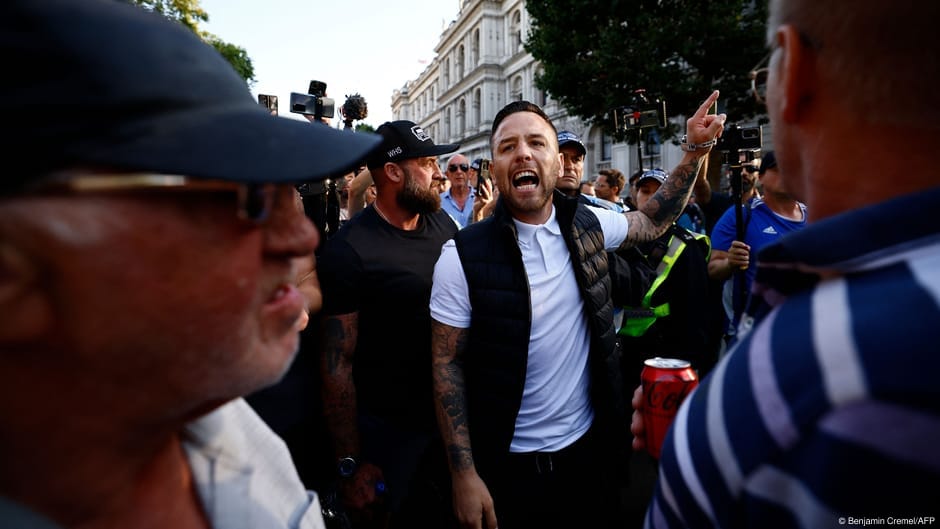
Daniel Thomas, 37, known as 'Danny Tommo,' received a 15-month prison sentence on Friday at Portsmouth Crown Court for slashing a dinghy with a knife while a French rescue worker was on board. The September 22 incident, which Thomas livestreamed to a large social media audience, represents a dangerous escalation in anti-migrant activism that cannot be tolerated—not because of political disagreement over immigration policy, but because it substitutes lawless violence for legitimate democratic process.
Judge James Newton-Price correctly identified the core problem: Thomas's actions amounted to 'flagrant interference and a deliberate disruption' of the legitimate activities of British and French authorities in the Channel. The judge counted eight cuts from Thomas's knife and noted that while there was 'no immediate danger' to the rescue worker, his aggressive behavior would have been 'highly alarming.' This was not protest. This was not civil disobedience. This was a man with a knife attacking infrastructure during an active rescue operation, all while performing for an online audience. Thomas himself declared during the livestream that 'this is what needs to happen,' framing criminality as necessity.
Thomas founded Patriot Platform, an anti-immigration group, and has built considerable prominence leading confrontational demonstrations in Portsmouth and Dover earlier this year—events where hundreds of protesters blocked roads, clashed with police, and increasingly targeted rescue workers. His five previous convictions, including one for kidnapping in 2016, reveal a pattern of escalating confrontation. Yet the most troubling aspect is not his individual history but what his actions represent: the normalization of direct action against government operations by activists who have concluded that electoral politics and lawful advocacy are insufficient.
Britain's Border Force, Coastguard, and volunteers from the Royal National Lifeboat Institution (RNLI) perform what Judge Newton-Price rightly called 'necessary, highly sensitive and difficult jobs.' These operations deserve protection from disruption—not because rescue workers are beyond criticism, but because functioning government requires that citizens pursue disputes through established channels, not knives.
Thomas's connection to 'prominent far-right activist Tommy Robinson' and his alliance with movements increasingly targeting police and rescue workers signal a broader problem: when political frustration transforms into contempt for democratic institutions themselves. More than 41,000 people crossed the Channel in small boats last year, and the number remains a major political issue. That legitimacy demands serious policy debate. But it demands solutions forged through democratic means, not vigilante action that transforms activists into obstacles to government functioning.
Under current UK sentencing rules, Thomas may serve only a third of his sentence. However long he remains imprisoned, his conviction should send a clear message: channeling political disagreement through violence against government operations carries consequences. Those frustrated by migration policy have abundant legal avenues—electoral politics, organized campaigns, public protest. What they cannot do, what no democratic society can permit, is attack the state's ability to function.