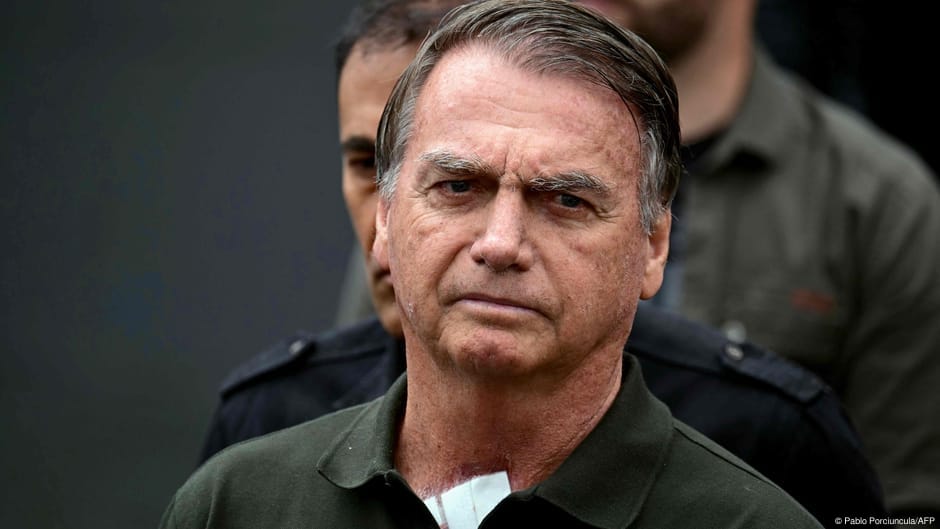
When Jair Bolsonaro was rushed to DF Star Hospital in Brasília on Friday with a near-complete intestinal obstruction, it marked another chapter in the former president's troubled relationship with the Brazilian justice system. At 71 years old, Bolsonaro is receiving pain medications and undergoing initial treatment without invasive intervention, according to his son Carlos. But his hospitalization raises uncomfortable questions about how Brazil should handle the detention of a convicted former leader whose health appears to be genuinely deteriorating.
Bolsonaro's medical vulnerabilities are real and documented. He was stabbed in the abdomen during the 2018 campaign, an injury that has resulted in multiple hospitalizations and surgeries since. This history matters when evaluating his current condition. Yet it cannot obscure the gravity of his convictions. Bolsonaro was sentenced last year to 27 years under house arrest for plotting a coup after his 2022 election defeat to current President Luiz Inacio Lula da Silva. This was not a minor political dispute—it was a conspiracy to overturn democratic results.
His son Carlos has blamed Bolsonaro's hospitalization on the detention itself, claiming his father's health is "deteriorating every day in prison due to his lack of mobility" and what he calls "the psychological torture he suffers daily." These are powerful emotional arguments designed to build sympathy. But they conflate legitimate criticism of excessive imprisonment conditions with an argument that Bolsonaro should not face consequences for his actions. The two are not equivalent.
The fundamental issue is this: Brazil must find a way to enforce its judicial sentences against serious crimes—including coup plotting—without allowing detention conditions to become genuinely inhumane. Bolsonaro's humanitarian house arrest was already a significant accommodation. The question now is whether his medical condition requires further adjustments to his detention, not whether he should escape accountability for his conviction.
Meanwhile, another layer of irony underlies this situation. Bolsonaro's son Flavio recently lost the October presidential election to incumbent Lula and subsequently left Brazil to reside in Florida. The Bolsonaro political project, which once dominated Brazilian politics, appears to be fragmenting under legal pressure and electoral rejection. This should perhaps encourage the former president to accept the judiciary's verdict rather than frame it as a "left-wing judicial witch hunt." Brazil's courts have spoken. His health challenges deserve medical attention—but they do not rewrite the legal reality of his convictions.