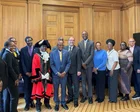
Speightstown, Barbados' second-largest town, has signed a three-year memorandum of understanding with Bristol, England, acknowledging their shared history rooted in the transatlantic slave trade. Barbados Labour Minister Colin Jordan signed the agreement with Bristol city council leader Tony Dyer on Friday at City Hall.
From the 17th and 18th centuries, Speightstown's port shipped sugar produced by enslaved African people to Bristol. Jordan said the MOU forms part of Barbados' wider push for reparatory justice, led by Prime Minister Mia Mottley, but on a smaller scale than grand financial claims. "I see the MOU as part of the reparative process," Jordan said. "It is doing it in a complementary way because it is focused on the relationships between two towns, two cities, two peoples."
The agreement carries no dedicated funding and sets out cooperation on heritage, education, tourism, culture and the creative economy. Terms will be determined through future discussions. Jordan said Barbados does not expect "some grand $4tn something somewhere" but rather "building block by building block."
Jordan framed repair as broader than money. He cited potential school exchanges and sports connections, and suggested the relationship could offer "psychological repair" to Bristolians troubled by their ancestors' involvement in slavery. Edmund Hinkson, Barbados' high commissioner to the UK, noted that economists including the Brattle Group have estimated trillions of pounds are owed for two centuries of unpaid labour, but said "We know that the UK is not going to pay that." He pointed to recent Commonwealth dialogue recognizing the need for "structured and respectful dialogue" over Britain's role in enslavement.
Bristol city council leader Dyer said the deal should be "honest about the past" and warned against leaving it unused. The MOU runs to November 2029. Speightstown has a separate twinning arrangement with Reading, formally signed in 2003, and also with Charleston, South Carolina.