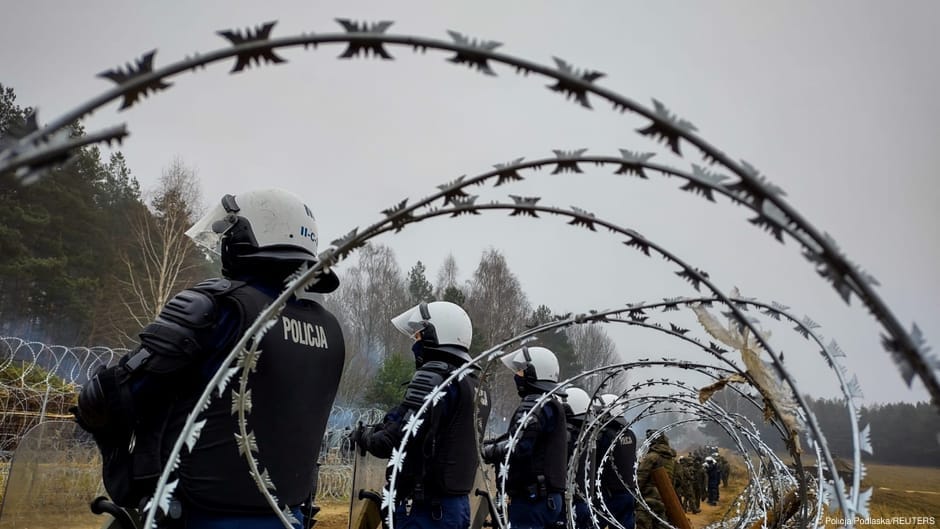
The European Court of Human Rights ruled Tuesday that member states of the Council of Europe can turn back migrants at their borders, but only if those migrants have not been identified as people at risk of suffering harm.
The court examined a case involving nationals from Afghanistan, Iraq and Cuba who tried to enter Poland, Latvia and Lithuania between 2021 and 2022. That period saw Belarus accused of deliberately manufacturing a migration crisis by arranging for third-country nationals to enter Belarus and then directing them toward EU borders. The court called this "instrumentalization of migration."
The ruling affirms that the 46 Council of Europe member states, which include all EU countries and some non-EU nations, have the right to control foreign arrivals at their borders. However, the court said states must still identify people at particular risk of harm and protect all migrants against inhumane or degrading treatment.
The migrants in the case claimed they were violently prevented from crossing into the EU without their asylum applications being examined. The European Court of Human Rights ordered Poland, Latvia and Lithuania to pay compensation for their treatment of migrants at the EU's eastern borders with Belarus.
The court stated in its press release that "in a context of instrumentalization of migration, the removal of a foreign national to the instrumentalizing state would not, as such, constitute a violation of Article 3 (prohibition of torture and inhuman and degrading treatment)."
Separately, five EU countries last week announced a plan with Rwanda to establish a return hub in the African nation to host rejected asylum seekers awaiting return to their countries of origin. Rwanda ranks low on human rights measures, and questions persist about whether the hub will sufficiently protect migrants' rights.