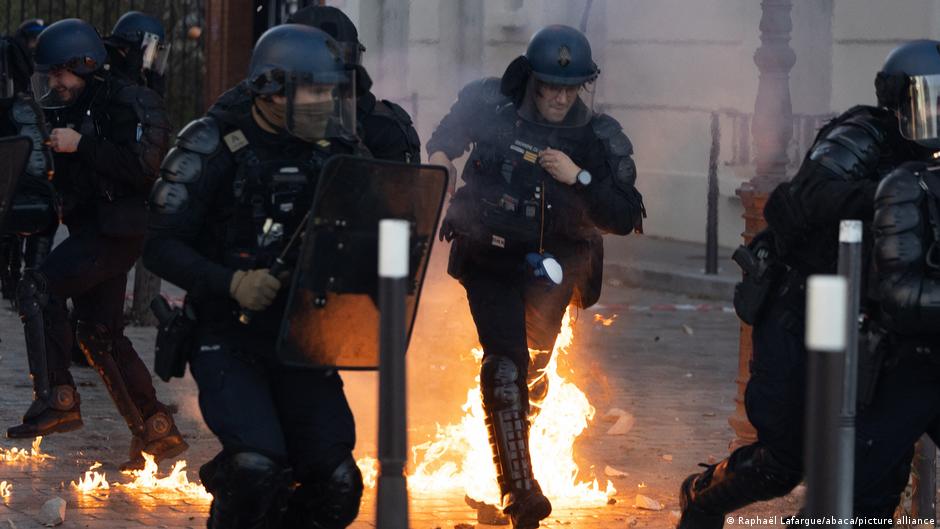
When Paris prosecutors opened an attempted murder investigation Sunday following a Molotov cocktail attack on security forces, they signaled that France's protest movement has crossed a dangerous threshold. The attack at Porte de Charenton, where explosive projectiles targeted about 15 gendarmes and police officers, left victims with second-degree burns and tinnitus. Photographs showed an incendiary device detonating at a gendarme's feet, setting his protective equipment ablaze. Interior Minister Laurent Nunez was correct to characterize this as attempted murder. This was not activism—it was violence designed to cause serious harm.
The statistics from France's weekend of demonstrations and Halloween night reveal a troubling pattern, even if the headline numbers appear encouraging. Yes, 779 nationwide arrests represent a decrease from the 1,314 arrests during the previous Saturday's mobilization and the staggering 2,628 on October 17 when rioting and looting broke out. Paris prosecutors reported 105 arrests in the capital alone, with 89 people remaining in custody, including at least 22 minors. These numbers might suggest better control, but they mask a critical failure: no suspects have been arrested for the Molotov attack itself.
The gap between the broad arrest figures and the specific investigation into attempted murder reveals how difficult it remains to hold perpetrators accountable for escalating violence. Investigators are still establishing the severity of injuries, suggesting a chaotic scene that complicated evidence gathering. When authorities increased security ahead of Halloween specifically due to online calls for violence, they anticipated trouble but could not prevent it. This reactive posture is insufficient.
The protests themselves, focused on high living costs and government policies, represent legitimate grievances. With nationwide turnout ranging from the ministry's 320,000 to unions' estimate of nearly 500,000 participants, Frenchpeople are expressing real concerns. Yet the presence of violent elements—those throwing Molotov cocktails—delegitimizes the movement and obscures its message. The fact that 22 minors remained in custody suggests young people are being radicalized into dangerous tactics.
France must pursue two urgent paths forward. First, prosecutors must dedicate substantial investigative resources to identifying and prosecuting those responsible for the Porte de Charenton attack. Leaving these perpetrators at large sends a message that attempted murder during protests carries no consequence. Second, protest organizers and political leaders must actively distance the legitimate movement from violent actors. The decrease in arrests compared to October 17 is welcome, but it cannot substitute for actually solving cases of serious violence. France's commitment to both civil liberties and public safety depends on ensuring that those who weaponize protests face justice.