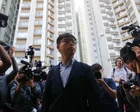
Joshua Wong, the 30-year-old who has led Hong Kong's pro-democracy movement for 15 years, was sentenced last week to a further 10 years in prison. This is not his first conviction—he will now spend more than 16 years behind bars. The charges stem from convictions under Hong Kong's national security law, a legal instrument so broadly weaponized that it has become a tool for silencing dissent rather than protecting security.
That Wong rose to global prominence speaks to the historical moment he inhabited. A teenager leading protests at just 14 years old, he became the face of Hong Kong's resistance to what he and millions saw as an erosion of the autonomy promised under the 'one country, two systems' framework. Time magazine put him on its cover. Netflix made a documentary about his life. He was not a fringe activist but an internationally recognized symbol of young people fighting for their democratic rights.
His incarceration demonstrates how comprehensively that promise has been abandoned. The national security law under which he is convicted has become the mechanism for converting political opposition into crime. When a teenager's decision to protest can ultimately lead to 16 years in prison as an adult, the system is no longer one of justice—it is one of control. The draconian nature of the law, as Danny Vincent describes it, is not incidental to Wong's fate; it is the entire point.
What makes this particularly troubling is that Wong's case is not an anomaly but a pattern. Fellow movement leader Nathan Law, quoted in this podcast discussion, understands intimately the prospects—or lack thereof—for democracy in Hong Kong. The imprisonment of such a visible, internationally-known figure sends an unmistakable message to anyone else considering activism: resistance will be met with decades of imprisonment.
The international community should be clear about what has occurred. Hong Kong's promise as a city of freedoms has been replaced by a system where a 30-year-old can be imprisoned for his youthful political convictions. Joshua Wong's sentencing is not a legal outcome; it is a political verdict on the death of Hong Kong's autonomy. The question now is not whether democracy has prospects in Hong Kong—it is whether anyone will remain willing to fight for it.