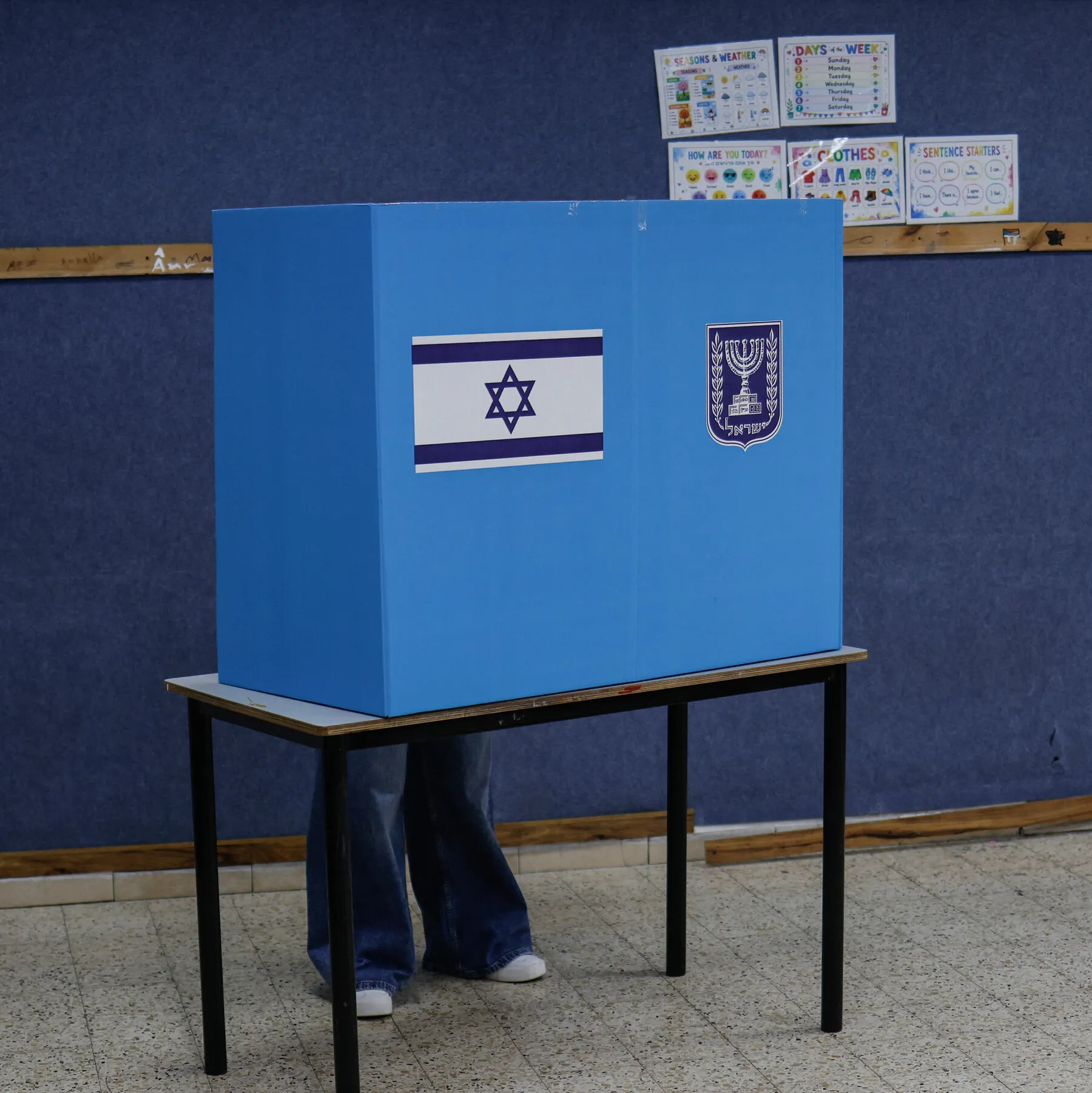
Israelis voted in large numbers on Tuesday in an election where exit polls showed Prime Minister Benjamin Netanyahu's alliance and a bloc led by opposition figure Gadi Eisenkot in a near tie. Both candidates claimed victory in late-night addresses, though vote counting was expected to continue for days before official results emerged.
Exit polls suggested neither bloc could form a government without support from two Arab parties projected to win 17 or 18 seats. Netanyahu has ruled out including Arab parties in his coalition. Eisenkot and his partners have also resisted the idea, though the report notes Eisenkot has floated forming a minority government.
Netanyahu declared it was clear his Likud party emerged as the largest single party. He called for forming "a strong right-wing government" and invoked his relationship with President Trump while discussing Iran. Eisenkot struck a defiant tone, stating "The public wants change" and warning Netanyahu not to "abuse his power as caretaker prime minister to influence the process of forming a new government."
Israel's president, Isaac Herzog, will invite the party leader deemed most likely to assemble a coalition after official seat allocations are completed. A governing coalition typically requires at least 61 of 120 parliamentary seats. The report notes exit polls have "a spotty history of accuracy, particularly in tight races," and that hundreds of thousands of special votes cast at military bases, hospitals and embassies have not yet been counted. Those votes tended to favor Netanyahu's alliance in the previous election.