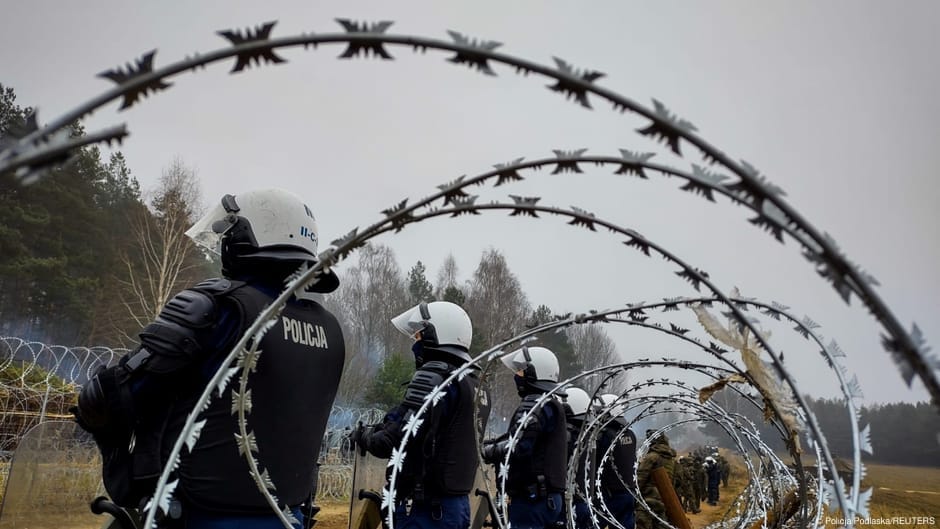
The European Court of Human Rights has handed European governments a gift they may not deserve. On Tuesday, the continent's top human rights court ruled that the 46 member states of the Council of Europe—including all EU nations—have the right to control foreign arrivals and can turn back migrants even in hostile circumstances. For leaders facing migration pressures, this decision reads like permission to act decisively. But the ruling is far more conditional than the headlines suggest, and what happens next will reveal whether Europe truly means what it says about upholding human rights.
The case itself emerged from one of Europe's ugliest recent episodes: the 2021-2022 border standoff between Belarus and EU member states Poland, Latvia, and Lithuania. Belarus, accused of manufacturing a migration crisis to pressure the European Union, orchestrated the arrival of nationals from Afghanistan, Iraq, and Cuba and directed them toward EU frontiers. It was, in the court's clinical language, an "instrumentalization of migration." The European Court ruled that states have a right to defend their borders even under such weaponized circumstances. That is not controversial. What matters now is whether governments treat this ruling as a license to dehumanize or as a framework for maintaining standards.
Here is where the court's decision matters most: it explicitly requires member states to identify migrants at particular risk of suffering and protect them from inhumane or degrading treatment. The court did not say states can simply turn people away. It said states must uphold human rights "even in hostile environments." Poland, Latvia, and Lithuania were ordered to pay compensation for their treatment of migrants at the EU's external borders—a signal that turning people back does not mean treating them without dignity. The court's language is careful: removal "would not, as such, constitute a violation" of prohibitions on torture and degrading treatment only if proper safeguards are in place.
Yet Europe is already testing these limits. Five EU countries last week announced a partnership with Rwanda to establish a so-called return hub for rejected asylum seekers. Rwanda ranks low on human rights measures, and there are serious questions about whether people's rights will be sufficiently protected there. This is precisely the kind of arrangement that exploits the court's decision while ignoring its spirit. Outsourcing migrants to countries with weak human rights records may technically comply with the letter of Tuesday's ruling, but it betrays its intent.
The European Court has given states the authority they sought. Now it must follow through on enforcement. Member states should remember that border control and human dignity are not opposing values—they are complementary obligations. The test of Europe's commitment to human rights will not be whether it can turn migrants away, but whether it does so with the safeguards and protections the court has demanded.