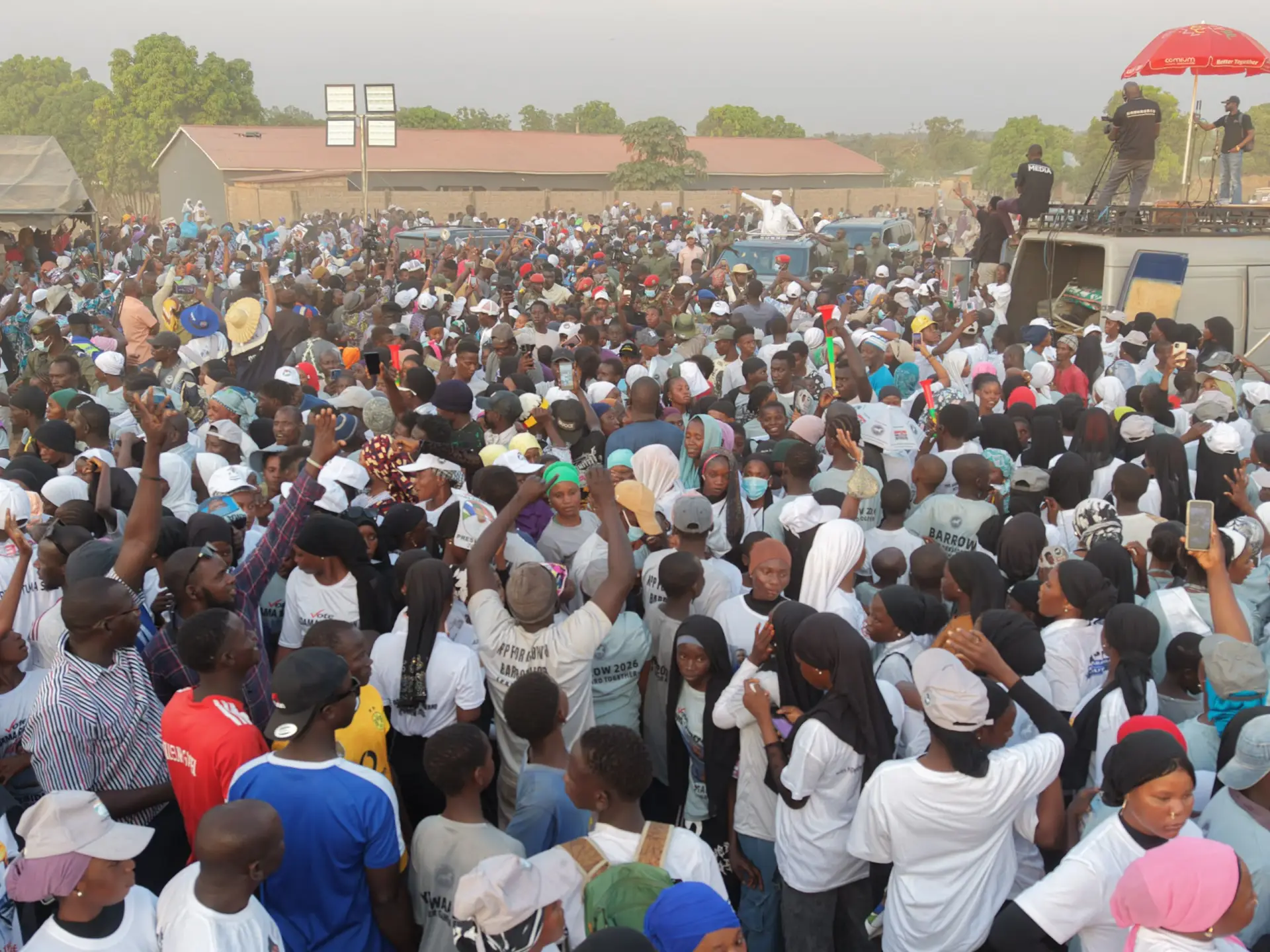
Nearly a decade after Yahya Jammeh's departure, Gambians face a stark reality: the promises of reform and justice that animated the 2017 transition remain largely unfulfilled. As voters prepare for the December 5 election, with President Adama Barrow seeking a third term among eight candidates, the disconnect between hope and outcome has become impossible to ignore. Economic hardship, stalled accountability, and unfinished constitutional reform reveal an administration that has failed to deliver on its most fundamental pledges.
The economic crisis is undeniable and deeply personal. The 2025 Gambia Labour Force Survey shows unemployment at 8.3 percent overall and 11.5 percent among those aged 15 to 35—a population for whom 41.3 percent are neither employed nor in education or training. Young graduates like Maram Mendy and Buba Sanneh face a cruel catch-22: employers demand experience that entry-level positions cannot provide. The desperation has become lethal. UN Special Rapporteur Morris Tidball-Binz reported that 1,603 Gambians died attempting irregular migration in 2024 and 893 in 2025, with the International Organization for Migration recording at least 408 Gambians missing since 2014. These are not merely statistics; they represent families destroyed by the absence of opportunity. Business owners like Sosseh Jagne struggle with electricity outages lasting 19 hours or longer, destroying inventory and livelihoods. Meanwhile, 53.4 percent of the population—about 1.1 million people—lived below the national poverty line in 2020, with rural poverty reaching 76 percent.
Justice and accountability have moved at a glacial pace. The Truth, Reconciliation and Reparations Commission made 263 recommendations, yet fewer than 25 percent have been fully implemented. Victims like Sainabou Camara Lowe, injured during the violent suppression of student demonstrations in April 2000, received reparations of about 900,000 dalasis that barely addressed her family's ongoing hardship. A special tribunal to prosecute alleged crimes committed under Jammeh is only now expected to begin hearings early next year. For the children of Ebrima Solo Sandeng, who died under torture in state custody in April 2016, nearly a decade of waiting represents a profound betrayal of post-transition pledges.
Perhaps most galling is the constitutional stalemate. The 2020 Draft Constitution, which would have imposed a two-term presidential limit and other institutional reforms, failed to secure the required two-thirds majority in the National Assembly in September 2020. Disagreements centered on whether Barrow's first term should count toward the proposed limit—a question that reveals the political self-interest undermining reform. The next president must demonstrate that democratic commitments supersede personal political calculations by finally delivering the constitutional reform promised nearly a decade ago.