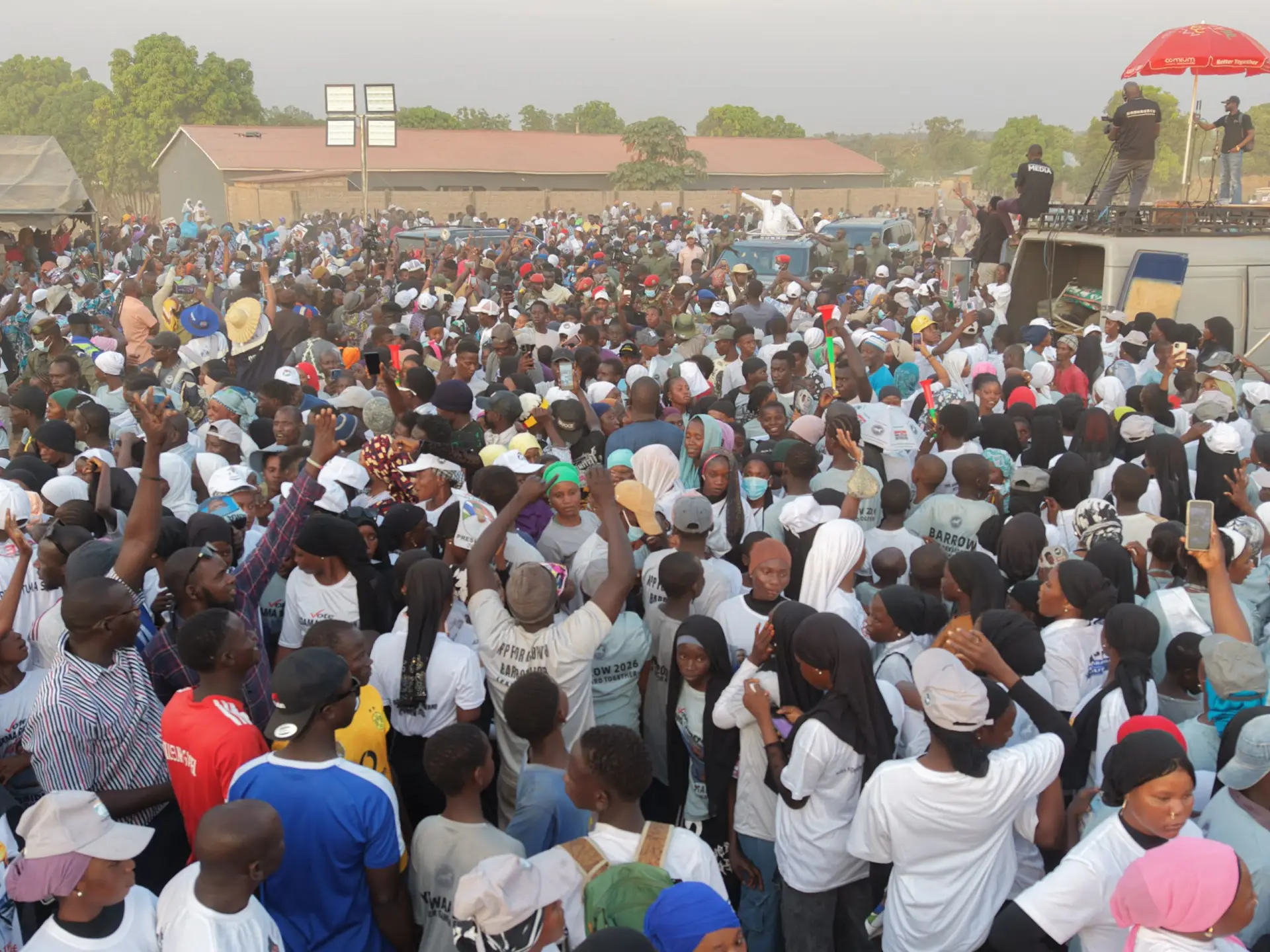
Gambians will vote December 5 for a new president amid widespread economic hardship and stalled reforms nearly a decade after Yahya Jammeh's 22-year rule ended in 2017.
President Adama Barrow, who defeated Jammeh in 2017, seeks a third term among eight candidates. Voters cite multiple failures of his government: unemployment stands at 8.3 percent overall and 11.5 percent for people aged 15 to 35, according to the 2025 Gambia Labour Force Survey. Power cuts lasting 19 hours or more have disrupted businesses. Rising living costs push families toward subsistence. The Gambia Bureau of Statistics reported that 53.4 percent of the population lived below the poverty line in 2020, with rural poverty at 76 percent.
Irregular migration to Europe has become a desperate option for some young people. UN Special Rapporteur Morris Tidball-Binz stated in an October 2026 visit that independent sources reported 1,603 Gambians died attempting irregular migration in 2024 and 893 in 2025, mostly at sea. The International Organization for Migration recorded at least 408 Gambians missing along migration routes since 2014.
Victims of Jammeh-era abuses also remain frustrated. Kebba Jome, national coordinator of the Gambia Centre for Victims of Human Rights Violations, said fewer than 25 percent of 263 recommendations from the Truth, Reconciliation and Reparations Commission had been fully implemented. A special tribunal to prosecute alleged Jammeh-era crimes is expected to begin hearings early next year, Jome said.
Business owner Sosseh Jagne estimated that electricity outages between August and October cost her restaurant over 40,000 Gambian dalasis ($532) in spoiled food. Market vendor Fatoumatta Jawara said rising prices made supporting her family increasingly difficult. Voter Isatou Ceesay said she had grown tired of politicians' promises.