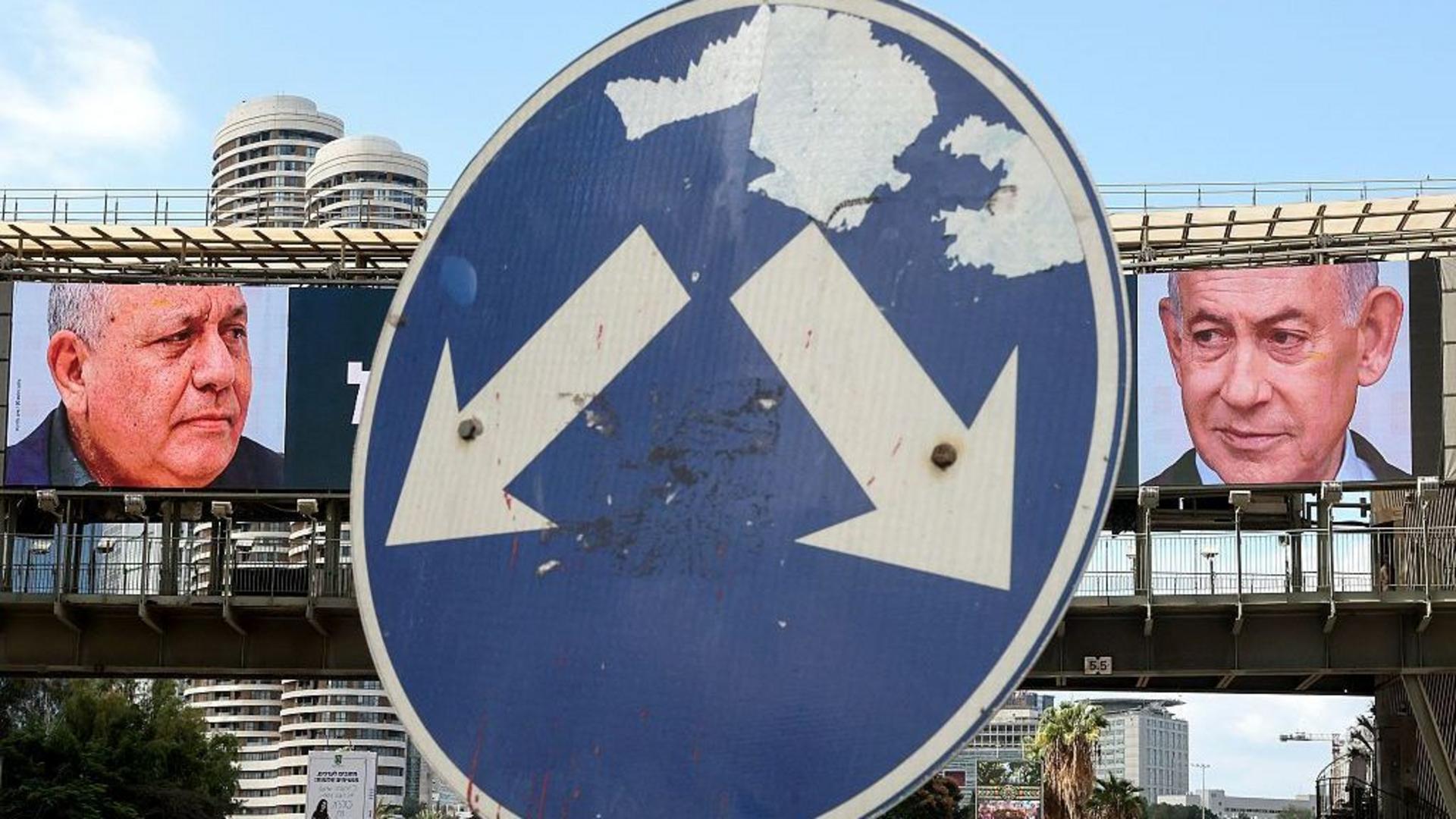
Israel faces a political deadlock after Tuesday's election. With 85% of votes counted, neither Prime Minister Benjamin Netanyahu's coalition nor challenger Gadi Eisenkot's bloc is projected to win a majority, according to the BBC.
Four potential paths out of the stalemate exist, each requiring significant compromises.
A unity government between Netanyahu and Eisenkot would require Eisenkot to abandon his core campaign message. He has framed himself as the sole alternative to Netanyahu and called on him to "announce his retirement from political life today" just before the vote shifted in Netanyahu's favor. At his election night rally, Netanyahu thanked his "loyal partners" and called for a "strong right-wing government," signaling he may preserve his current far-right and ultra-Orthodox alliances rather than invite Eisenkot's party.
A renewed conflict with Iran could create pressure for unity, the BBC reports. Israeli and US media reported in recent days that Netanyahu pushed for fresh strikes on Iran and pressed Donald Trump to approve US involvement.
An opposition coalition including Arab parties represents a historic possibility. Arab parties are projected to win a record 19 seats, driven by unprecedented turnout among Israel's Arab population. The United Arab List is projected to gain around 7 seats and has said it would join an opposition government. The Joint List, projected to win 12 seats, said it would support one from outside parliament. However, every Jewish party in Eisenkot's bloc except The Democrats' Yair Golan has ruled out working with Arab parties. Such a coalition would face fragility on Gaza and the occupied West Bank.
Netanyahu might persuade right-wing parties in Eisenkot's bloc, particularly Naftali Bennett's Beyachad alliance or Avigdor Lieberman's Yisrael Beiteinu party, to defect. Both leaders campaigned explicitly to oust Netanyahu and support military conscription for the ultra-Orthodox, putting them at odds with Netanyahu's current ultra-Orthodox partners. Current electoral math suggests replacing the ultra-Orthodox parties with these groups may not yield a majority.
If none of these scenarios succeed, new elections are the default outcome. Netanyahu would remain caretaker prime minister. Between 2019 and 2022, Israel held five separate elections as the parties failed to cooperate.