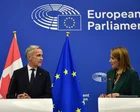
The European Union has retreated from offering Canada formal "associate membership" status, replacing the commitment with vaguer language about "ever closer association" ahead of a summit in Montreal this week.
EU Commission President Ursula von der Leyen announced last month that the bloc would explore associate membership for Canada, a designation no country outside the EU has held since the concept lacked formal precedent. The draft joint statement now circulating among member states commits only to "work to define by the 2027 EU-Canada summit the concept of an ever closer association of Canada to the EU, short of full membership itself."
Von der Leyen's original proposal surprised EU capitals and triggered pushback from member states concerned about undefined implications. Diplomats questioned whether associate membership would grant Canada seats in European Council bodies or voting rights in decision-making processes. Germany argued the status should be reserved for prospective candidate countries such as Ukraine or Montenegro, noting it has no formal grounding in EU treaties. At a Monday ambassadors meeting, members raised concerns but sought a diplomatic path to rescind the offer without embarrassing Von der Leyen.
Italy proposed defining associate membership after its initial adoption. Germany pushed further, suggesting only "an ever closer association" language. One unnamed diplomat told the Guardian: "Nobody was consulted about associate membership apart from [Von der Leyen's] closest staff, it would seem. Many member states, including Germany, were not happy. This is all about fixing the plane while it is flying."
Canadian Prime Minister Mark Carney downplayed the terminology shift on Tuesday, telling reporters: "The good news is it doesn't matter about specific names or nomenclature. What matters is the difference it will make to the lives of Canadians." He said the summit launches formal negotiations to continue over the next year.
US President Donald Trump previously called the associate membership proposal "laughable" and threatened trade retaliation if he interpreted it as hostile to American interests.